
Expert Lawn Care Tips for Growing Gorgeous Grass
Instant Overview
- Timing beats frequency. Soil temperature is the most reliable cue for when to fertilize your lawn.
- Grass type determines your schedule. Warm-season grasses (Bermuda, Zoysia, St. Augustine) need feeding in late spring through early fall.
- More fertilizer isn’t better. Overapplication burns grass, builds thatch, and causes runoff.
- Fertilization works best as part of a system. Proper mowing, watering, and soil testing all amplify your results.
- Reach out to the lawn care pros at Real Green to create the gorgeous yard of your dreams!
What’s the Purpose of Fertilizer?
Fertilizer delivers nitrogen, phosphorus, and potassium. Each one does something different.
Nitrogen is responsible for blade growth and the deep green color that signals a healthy lawn. Phosphorus works underground, supporting root development and the energy transfer that keeps grass resilient through Austin’s brutal summers. Potassium strengthens cell walls and improves the lawn’s ability to resist disease and environmental stress.
When all three are available in the right amounts at the right time, it works beautifully. Density increases, color improves, and the turf develops enough competitive strength to crowd out weeds without intervention.
A well-nourished root system also pulls moisture from deeper in the soil, which means a well-fed lawn genuinely needs less water than a neglected one.
The mistake most people make is treating fertilizer as something where more equals better. It doesn’t work that way.
Too much nitrogen applied at once can burn grass within days. Applying before heavy rain sends product into storm drains before the soil absorbs it, wasting money and raising legitimate water quality concerns. And pushing rapid growth at the wrong point in the season produces lush-looking grass that’s actually weak, disease-prone, and prone to crashing within weeks.
The goal is feeding your lawn in sync with its natural growth cycle, not against it.

Soil Temperature: The Indicator Most People Ignore
The most reliable signal for when to fertilize is what your soil temperature is doing.
Grass roots begin absorbing nutrients actively when soil temperatures reach around 65°F. Below that, fertilizer applied to the lawn either sits unused or washes away before the plant can use it.
For Austin’s warm-season grasses (Bermuda, Zoysia, and St. Augustine), the optimal range runs higher, between 70 and 85°F. These grasses want feeding during their active summer growth window.
Cool-season varieties like fescue and Kentucky bluegrass operate in a cooler range of 60 to 75°F, which is why their feeding schedule looks so different.
You can check soil temperature with an inexpensive probe thermometer from any garden center. It takes about ten seconds and changes how you think about timing entirely.
If you’d rather skip the thermometer, the lawn tells you the same thing visually. When grass transitions from its dull winter color to actively green and starts growing fast enough that it needs its first mow of the season, it’s ready.
How Often Does a Lawn Need Fertilizing?
Two to four times a year works for most Austin lawns. A minimal program can maintain a reasonably healthy lawn if you hit the highest-value windows. A full seasonal program of four or more applications produces noticeably better results for homeowners who want genuinely thick, resilient turf.
A few variables shape where your lawn falls in that range.
Grass Type
Warm-season grasses like Bermuda need more frequent feeding across their summer growth period because they’re actively growing and consuming nutrients for months. Cool-season grasses concentrate their nutritional needs into fall and early spring.
Soil Quality
Sandy soils common in parts of Central Texas don’t hold nutrients as well as dense, organic-rich soil, which means they need more frequent replenishment to maintain consistent availability.
Fertilizer Type
Slow-release granular formulas break down gradually over six to eight weeks, feeding the lawn steadily without requiring as frequent reapplication. Quick-release products deliver nutrients faster but need more careful timing and more frequent use to maintain consistent feeding.
Seasonal Schedule for Austin Lawns
Early Spring
When soil temperatures are climbing toward 65°F and the grass is starting to wake up from dormancy, a light early spring application supports root development before the active growth season begins. The emphasis on light matters.
Heavy nitrogen applications in early spring push rapid blade growth before the root system is ready to support it, which actually weakens the plant’s foundation for the rest of the season.
If the ground is still cold or the grass clearly hasn’t broken dormancy, skip this application. There’s no benefit to fertilizing grass that isn’t actively growing.
Late Spring
Six to eight weeks after the early spring application, a late spring feeding supports the period when warm-season grasses are growing most vigorously. A nitrogen-focused fertilizer does the heavy lifting.
This is also the window where a combined fertilizer and pre-emergent weed control product makes the most sense if crabgrass or other summer annuals have been a recurring problem.
Summer
Austin’s summer heat has the lawn working hard just to stay healthy. Summer lawn fertilization is about supporting that effort.
A light application of slow-release fertilizer provides steady nutritional support without the stress spike that quick-release nitrogen would cause in high temperatures.
If your Bermuda grass goes dormant during an extended heat stretch, hold off on fertilization until active growth resumes. Feeding dormant grass is a waste of product.
Fall
Warm-season grasses in fall are storing carbohydrates and building the root reserves that carry them through winter and power the spring green-up. A well-timed fall application fuels that process directly.
Apply in early fall while soil temperatures are still warm enough for active nutrient uptake. Just be sure to stop well before the first frost. Late-season applications that stimulate blade growth into cold temperatures leave the lawn vulnerable heading into winter.
Differences Between New Lawns & Established Lawns
For newly seeded areas, apply a starter fertilizer at or just before planting. Starter formulas are higher in phosphorus because new grass needs root establishment more than anything else at this stage.
With new sod, wait until the roots begin anchoring into the soil before fertilizing. That usually takes at least a few weeks after installation.
One important note for new lawns: Keep weed control products out of the picture until the grass is established. Pre-emergent herbicides work by preventing germination, which means they’ll stop your grass seed from sprouting along with the weeds. Post-emergent products can stress young turf. Wait until you’ve mowed two or three times before introducing any herbicide treatment.
For established lawns, follow the seasonal schedule and adjust based on what you’re actually observing. A lawn that bounced back quickly and greened up evenly may need less than one that recovered slowly or came in uneven.
Tips for Getting the Application Right
- Mow one to two days before applying fertilizer so the spreader moves cleanly and granules reach the soil surface rather than piling on top of long grass.
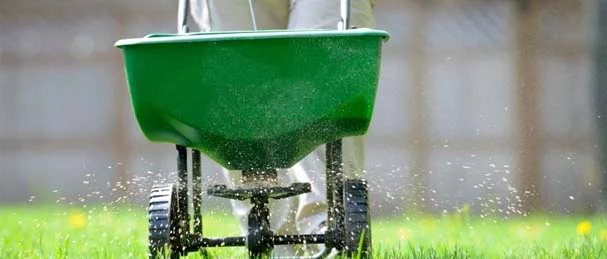
- Use a broadcast spreader for large open areas and a drop spreader near garden beds, water features, or property edges where precision matters more than speed.
- Overlap your passes slightly. Skipped strips show up within a week as lighter green lines running through an otherwise even lawn.
- After applying granular fertilizer, water lightly to move the product off the blades and into the soil.
- Don’t fertilize just before forecasted heavy rain. You want a gentle soak, not a downpour that sends everything into the street.
- Sweep any granules that land on driveways or sidewalks back onto the grass before watering.
4 Most Common Fertilizing Mistakes
Fertilizing too early in the season is the most common one. It feels productive, especially after a long winter, but applying to grass that isn’t actively growing yet mostly feeds weeds and risks runoff.
Overapplying, especially with quick-release nitrogen, causes lawn burn. It will turn yellow or brown a few days after application. The lawn looks worse after your effort than before it.
When the recommended rate feels conservative, apply it anyway. Slightly under-feeding produces better results than slightly over-feeding.
Applying before heavy rain wastes product and sends nutrients into storm drains. Check the forecast before you load the spreader. A light rain after application is fine. A downpour before it gets absorbed is not.
Ignoring grass type puts feeding on the wrong cycle entirely. Applying a summer fertilizer application to cool-season fescue during an Austin heat wave is actively harmful. Know what you’re growing before you decide when and how to feed it.
3 Things That Make Fertilization Work Harder
- Deep, infrequent watering encourages roots to grow downward toward moisture rather than staying shallow. Deeper roots access nutrients from a larger soil volume, which means fertilizer applied at normal rates goes further. Daily shallow watering produces the opposite effect.
- Leaving grass clippings on the lawn after mowing returns nitrogen to the soil continuously throughout the growing season. A mulching mower essentially functions as a low-level background fertilizer application that costs nothing and requires no extra effort.
- Soil testing every two or three years gives you actual data on pH, nutrient levels, and organic matter rather than guesses. It turns a generic seasonal schedule into one calibrated to your specific yard.
Common Questions About Lawn Fertilization
-
Can you fertilize too much?
Yes. Burned grass, thatch buildup, and nutrient runoff are all consequences of overapplication.
-
Before or after rain?
Apply on dry grass, water lightly afterward. Heavy rain before the product absorbs washes it away.
-
Should I fertilize if my lawn looks green?
Color is one indicator, but it doesn’t tell the whole story. Growth rate, density, and root development give a more complete picture of whether the lawn is genuinely well-nourished or just holding on.
-
What month works best?
For warm-season grasses in Austin, late spring (MAy) and early fall (September) are the two most valuable windows.
Real Green Is Here to Help!
A well-executed seasonal fertilization program requires consistent attention to timing, grass type, product selection, and application rates across multiple windows throughout the year. Done well, the difference is visible.
If you don’t want to use your free time (and energy) to take care of every little lawn care detail, reach out to Real Green today! We proudly serve Austin and the surrounding communities of Central Texas, ensuring high-quality lawn care and pest control services across the area.
Blog Contributor: James Duhon
James Duhon serves as Branch and Area Manager for Real Green in Austin, with 20 years of experience. He is licensed by the Texas Department of Agriculture for both lawn care and structural pest control. His professional insight is shaped by service quality, customer satisfaction, team success, and two decades of leadership in lawn and pest operations.