
Find Out Why Lawn Care Pros in North Texas Recommend Mulching
In This Article:
- North Texas conditions, such as clay soil, triple-digit summers, and unpredictable freezes, make mulch essential
- Mulch is anything that covers bare soil, and it’s vastly different from compost
- Lawn mulching vs. garden mulching are two different practices, one underlying goal
- Learn how to choose the right material, apply it correctly, and time it for DFW’s climate
- GroGreen provides expert lawn care and pest control across Dallas-Fort Worth and surrounding communities
What Mulch Is & Isn’t
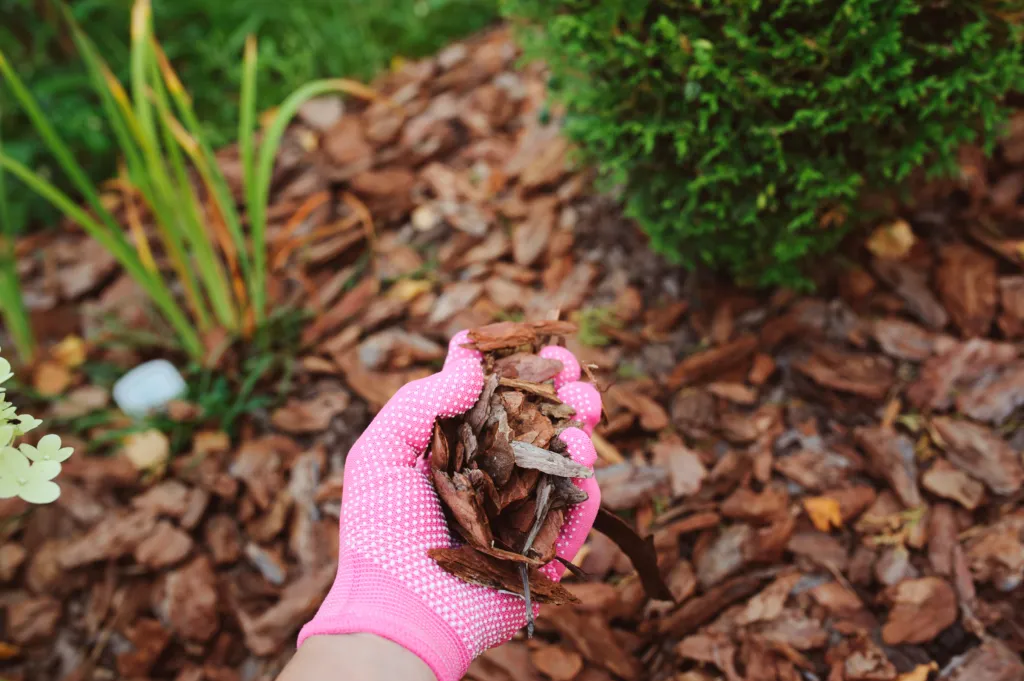
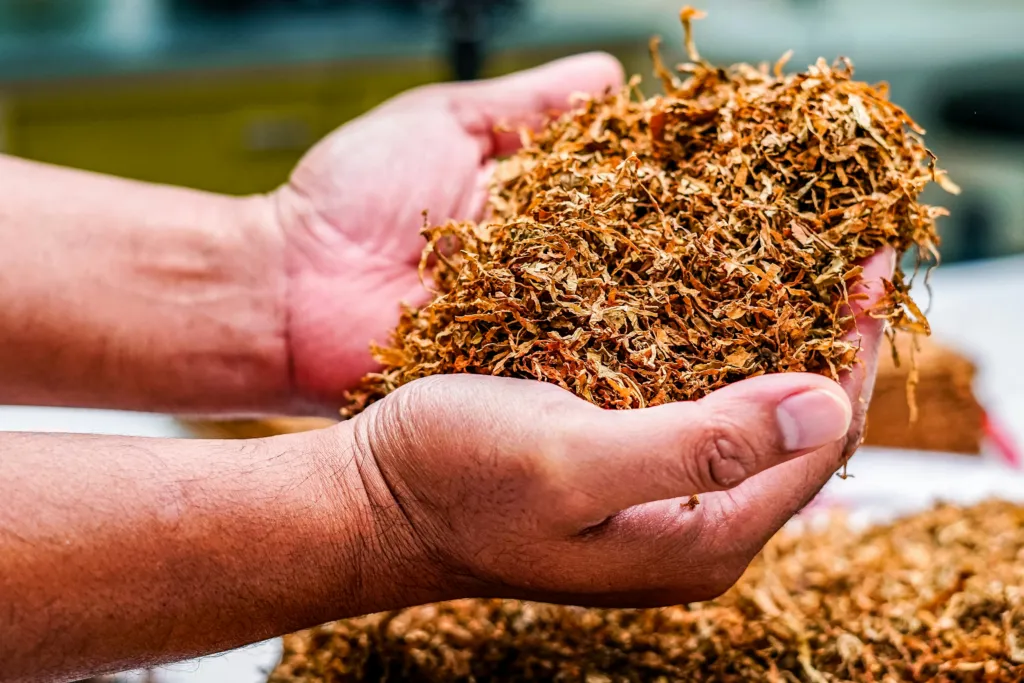
Mulch is any material spread over bare soil to protect or improve it. The material itself can range widely, from bark chips, shredded leaves, and pine needles to straw, gravel, rubber, and finely cut grass clippings.
What connects all of them is the layer. It’s something sitting on top of the soil, doing several jobs at once that bare dirt can’t do.
Keep in mind that mulch and compost aren’t the same thing. Mulch stays on the surface, retaining moisture, blocking weeds, and moderating temperature. Compost gets worked into the soil to feed plant roots directly.
If your soil needs nutrients, add compost. If it needs protection, that’s mulch.
What North Texas Soil Is Up Against
The clay problem. Much of the DFW area sits on black clay. In summer, it becomes almost rock-hard, which prevents water from penetrating, sending it running off instead of soaking in.
Mulch helps fix this. It keeps the soil surface from sealing over, slows the drying process that causes cracking, and allows rain to reach the root zone.
The heat. Sustained stretches at 100°F and above are common in DFW summers. Soil surface temperatures in unprotected beds can exceed air temperature significantly. An insulating layer of mulch keeps the root zone cooler. It’s the difference between roots that survive a heat wave and roots that shut down.
Water conservation. North Texas has experienced serious drought cycles, and many DFW communities have implemented watering restrictions during dry periods. Mulch reduces evaporation from the soil surface, so the water that does reach the soil goes further.
Temperature swings. DFW winters are unpredictable, too. Hard freezes can arrive with little warning in January or February, and plants that went into the ground in fall don’t always have the root depth to handle them. A consistent mulch layer buffers against those sudden temperature drops in ways that exposed soil can’t.
Two Different Things Both Called “Mulching”
Garden bed mulching is the more familiar version. This involves spreading bark, leaves, straw, or gravel over the soil around shrubs, perennials, trees, and vegetable gardens.
The goal is coverage. You’re protecting soil from the elements, reducing evaporation, controlling weeds, and gradually improving the ground underneath as organic material breaks down.
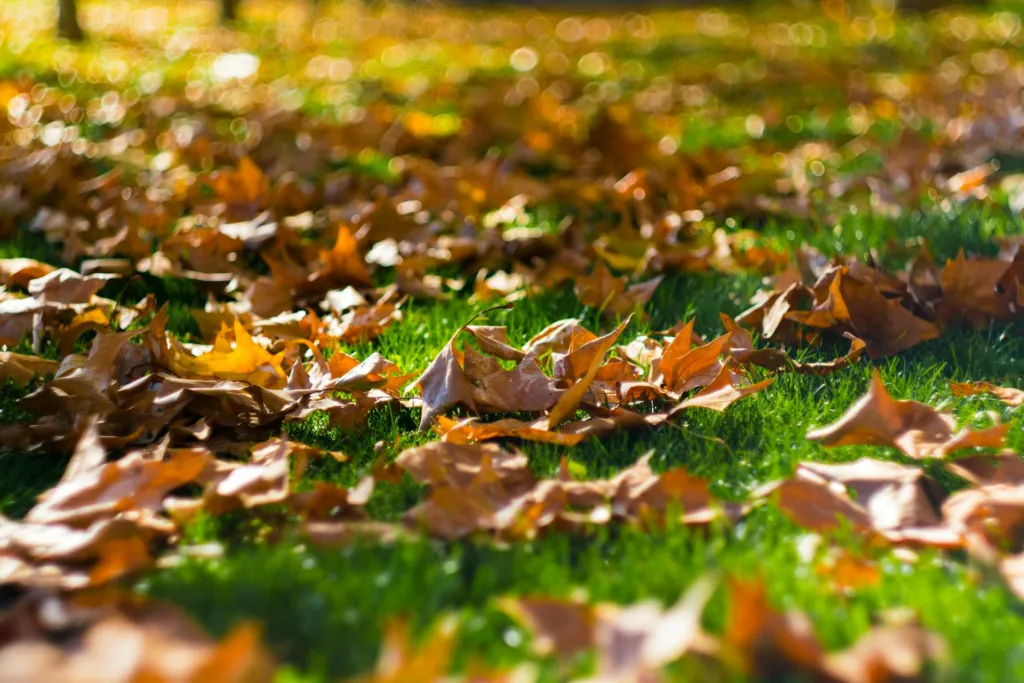
Lawn mulching is a mowing decision. Instead of bagging grass clippings or discharging them out the side of the mower, a mulching mower finely chops them and deposits them back into the turf.
They settle between grass blades and decompose in a day or two. This returns nitrogen, potassium, and other nutrients to the root zone.
For the warm-season grasses most common in DFW (Bermuda, St. Augustine, and Zoysia), this is a high-value habit across a long growing season. Every mowing session becomes a low-grade fertilizer application.
Over a full year, the accumulation of returned nutrients supports stronger, denser turf and reduces how much synthetic fertilizer you need to maintain it.
Organic vs. Inorganic Mulch
What Is Organic Mulch?
Bark, wood chips, shredded leaves, pine needles, straw, hay, and grass clippings. Anything plant-derived that will eventually break down.
The decomposition means periodic replenishment, but it also means the soil beneath gradually improves over time. Microbes and earthworms process the organic material and return it in forms that benefit the soil.
Organic mulch is the right choice for vegetable gardens, flower beds, and any planting area where soil health over time is the priority.
What Is Inorganic Mulch?
Gravel, crushed limestone, river rock, rubber chips, plastic sheeting, and landscape fabric. These don’t decompose, which makes them long-lasting and low-maintenance.
They suppress weeds and retain moisture effectively without needing seasonal replacement. The trade-off is that they give nothing back to the soil.
Inorganic mulch works well around foundations, established trees, and plants that prefer dry or rocky conditions. Once it’s in place, removing it is difficult. So think hard before installing it anywhere you might want flexibility later.
Timing for North Texas
DFW’s climate creates some specific timing considerations that differ from what you’d read in general gardening advice written for cooler regions.
For garden beds, late winter through early spring (roughly February through March) is the primary window. Soil in North Texas warms earlier than most of the country, and getting mulch down before spring weed germination is the most effective way to stay ahead of the season. Watch the forecast and wait for a string of consistent daytime warmth before laying down a spring application.
A second application in early fall (September into October) protects the soil and root systems through winter, gives organic material time to begin breaking down before growth slows, and refreshes beds that have thinned through the summer.
For lawns, mid-spring is the right starting point, once warm-season grasses are actively and consistently growing. The productive mulching window runs through summer, when growth is vigorous and mowing frequency is high.
An early fall session before growth slows returns one last round of nutrients before the lawn goes dormant. Once growth becomes uneven and the lawn stays damp for extended periods after mowing, switch back to conventional mowing.
Matching Material to the Job
Bark & Wood Chips
The standard choice for trees, shrubs, and foundation beds that aren’t disturbed frequently. Avoid dyed or treated products unless you know exactly what’s in them.
Shredded Leaves
Free every fall, excellent for building soil biology, and particularly beneficial for the heavy clay soils across much of DFW because they break down into organic matter that loosens clay structure over time.
Grass Clippings
Best returned to the lawn through mulching rather than used in beds, where thick or wet layers mat together and block the water they’re supposed to retain.
Layered Newspaper
Several sheets moistened and covered with another organic mulch creates a biodegradable weed barrier that works surprisingly well.
Straw & Hay
A practical choice for vegetable gardens and garden paths. They reduce disease splash onto lower foliage and hold up through a growing season.
Pine Needles
Good at resisting compaction and allowing water to pass through easily, which matters when clay soil is prone to runoff.
Plastic & Landscape Fabric
Effective at blocking weeds and retaining moisture around established shrubs. Plastic restricts air and water movement and can bake in DFW summer heat in ways that damage soil biology.
Crushed Granite & Decomposed Granite
Well-suited to drought-tolerant plantings, Texas natives, and areas where drainage is a priority.
How to Apply It Correctly
Start by fully preparing the area. Pull weeds by the root. Remove old mulch that’s compacted beyond usefulness. Level the soil before anything new goes down.
Depth matters more than most people realize. Two to three inches is the target, and it’s a meaningful range. Less than two inches and moisture retention and weed suppression drop off noticeably. More than three inches and you start blocking air and water exchange at the soil surface.
The mulch volcano look, with material mounded against a tree trunk, is a reliable source of rot and disease. Pull mulch back a few inches from every trunk and stem.
Leave some soil bare. Ground-nesting bees depend on exposed dirt, and plants that spread by reseeding need uncovered soil to do it.
When Mulching Works Against You
Overgrown grass. Missing mowing sessions and then trying to mulch the results creates more volume than the turf can absorb. The clippings pile up rather than dispersing, blocking light and airflow.
Wet or heavily shaded areas. Persistently damp or shaded turf produces clippings that clump on the surface. Those piles can lead to lawn disease. If certain areas of the lawn stay consistently wet or shaded, conventional mowing with clipping removal is best.
Skipping mowing sessions. Lawn mulching depends on regularity. Long clippings from infrequent mowing are too heavy and bulky to break down cleanly and it gives weeds a chance to flourish.
New or struggling lawns. Young turf needs to establish itself before mulching puts any additional demand on it. Give newly seeded or sodded lawns a full season before switching to a mulching routine.
Mulch Questions
-
Can I mulch fallen leaves into the lawn?
Light, dry leaves can be finely cut into the turf alongside grass clippings without issue. Thick or matted leaf deposits should be collected and composted, not mulched.
-
What about weed spreading?
Regular mowing prevents most weeds from reaching the stage where they produce viable seed. The risk is mulching areas where weeds have already gone to seed, which can spread them.
-
How much do I need?
Two to three inches in garden beds. Lawn clippings should form a thin layer that disappears into the turf within a day or two after mowing.
-
Is mulch necessary everywhere in the yard?
No, and some plants do better with exposed soil or a mineral surface. But in North Texas, the moisture retention, temperature buffering, and soil improvement benefits make mulch a strong default for most planted areas.
-
Does lawn mulching cause thatch?
No. Thatch accumulates from dead roots, stolons, and stems, not from finely cut clippings that decompose quickly with consistent mowing.
Let’s Create a Beautiful Yard Together!
In North Texas, mulch stands between your garden beds and the full impact of a DFW summer. Get the material, depth, and timing right and it becomes one of the most efficient investments you can make in your yard’s long-term health.
Mulch means less watering, fewer weeds, better soil, and roots that hold up when the heat index climbs past what seems reasonable.
Ready to take your lawn care and pest control to the next level? Reach out to the local experts at GroGreen! We proudly serve Dallas-Fort Worth and these surrounding communities:
Addison | Allen | Anna | Aubrey | Balch Springs | Carrollton | Cedar Hill | Celina | Coppell | Dallas | Desoto | Duncanville | Flower Mound | Frisco | Garland | Grand Prairie | Hutchins | Irving | Lancaster | Lavon | Lewisville | Little Elm | McKinney | Melissa | Mesquite | Nevada | Plano | Princeton | Prosper | Richardson | Rockwall | Rowlett | Sachse | Seagoville | Sunnyvale | The Colony | Wilmer | Wylie | Murphy | Parker | Lucas | Fairview | St Paul | Hebron | Lowry Crossing