
Discover the Kinds of This Pesky Found in Texas & How to Eradicate Them
Quick Overview About the Nutsedge Weed
- It’s a perennial sedge that returns every year and grows from underground tubers rather than seeds.
- Typical pre-emergent herbicides you use against most weeds do absolutely nothing to stop it.
- A single tuber left in the soil has the potential to generate up to 1,900 new plants and 7,000 new tubers within one growing season.
- Yellow nutsedge is the more widespread variety, but somewhat easier to manage.
- Purple nutsedge is more aggressive and harder to eliminate.
- Targeted herbicides, correct timing, and a willingness to treat year after year are what bring nutsedge under control.
- Prevention strategies (better drainage, adjusted watering habits, dense healthy turf) will help reduce future pressure.
- When it gets beyond what DIY methods can handle, Real Green is here to help homeowners in Central Texas.
Get to Know the Nutsedge Weed
Most people notice nutsedge when they realize something in the lawn is growing faster than everything else. It’s also a slightly different shade of green and pulling it out doesn’t seem to help. If that sounds familiar, nutsedge is almost certainly what you’re dealing with.
Despite looking like an aggressive grass, it’s not actually a grass. Nutsedge belongs to the sedge family.
Its leaves are thicker and stiffer than typical lawn grasses, arranged in groups of three at the base of the stem. The overall growth habit is upright and rapid. It shoots up much faster than the surrounding turf during summer months, which is why it stands out the way it does.
What makes it genuinely difficult to manage is underground. Each plant connects to a network of rhizomes (underground stems) tipped with small tubers called nutlets. These nutlets function as the plant’s backup system.
Even if the above-ground growth is killed, nutlets left in the soil will produce new shoots. They can remain dormant for months or years before activating, which is why nutsedge somehow seems to reappear even after what seemed like a successful treatment season.
Fortunately, if you live in Austin, with professional lawn care from Real Green, you can get nutsedge and other weeds under control!
Is It Nutsedge in Your Grass?
Getting the correct ID before you treat is important. Some herbicides formulated for nutsedge can damage desirable turf grass if misapplied, and treating the wrong plant means the real problem keeps spreading.
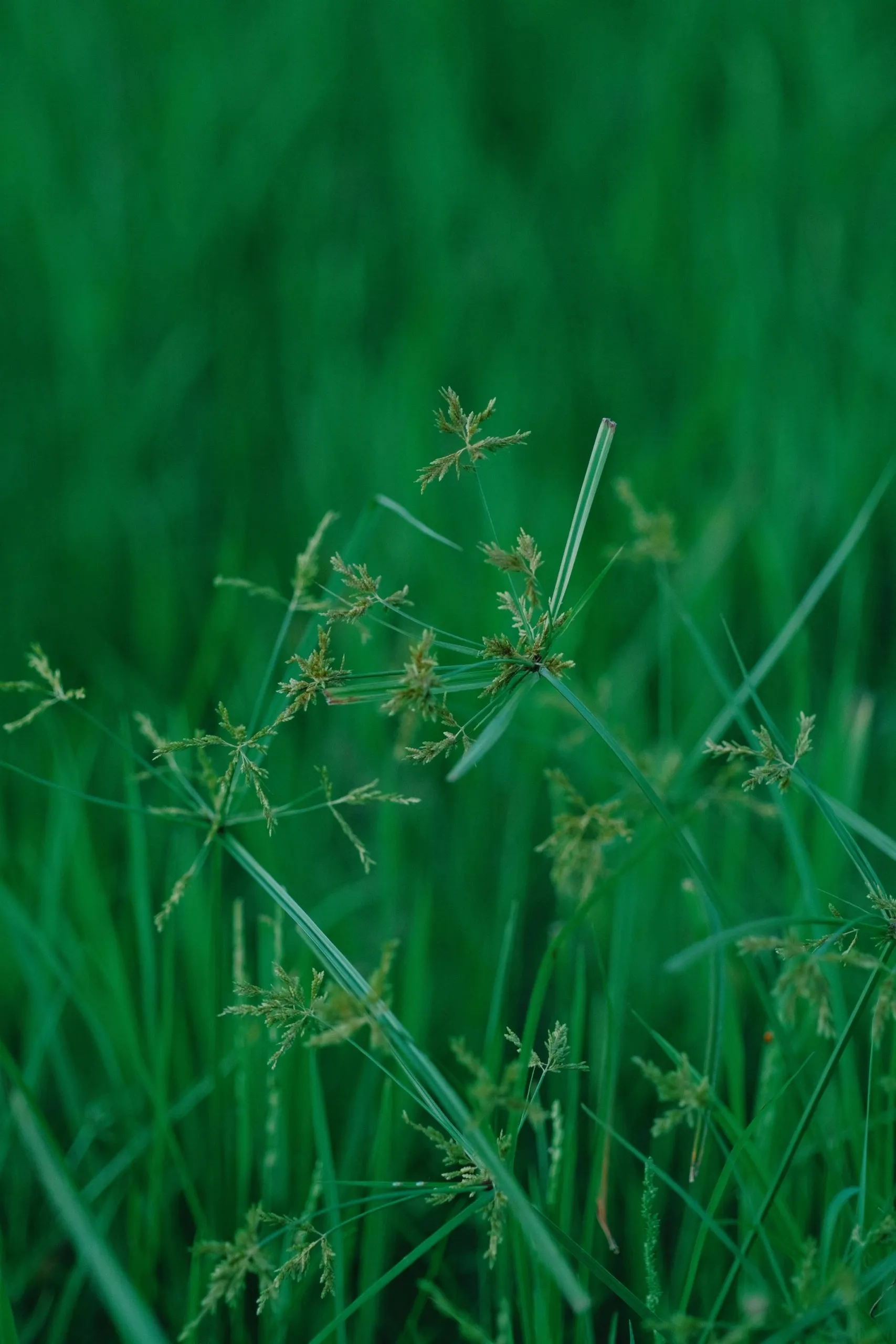
The most reliable identifier is the stem. Roll it between your fingers. Nutsedge stems are triangular, with three distinct edges, while grass stems are round or flat. Just remember the handy rhyme that sedges have edges.
Beyond stem shape, look for:
- Color: brighter and more yellow-green than surrounding turf, especially in summer
- Leaf arrangement: blades growing in sets of three from the base of the stem
- Growth rate: visibly outpacing the grass around it between mowing sessions
- Texture: a slightly waxy sheen on the leaf surface, compared to the matte finish of most lawn grasses
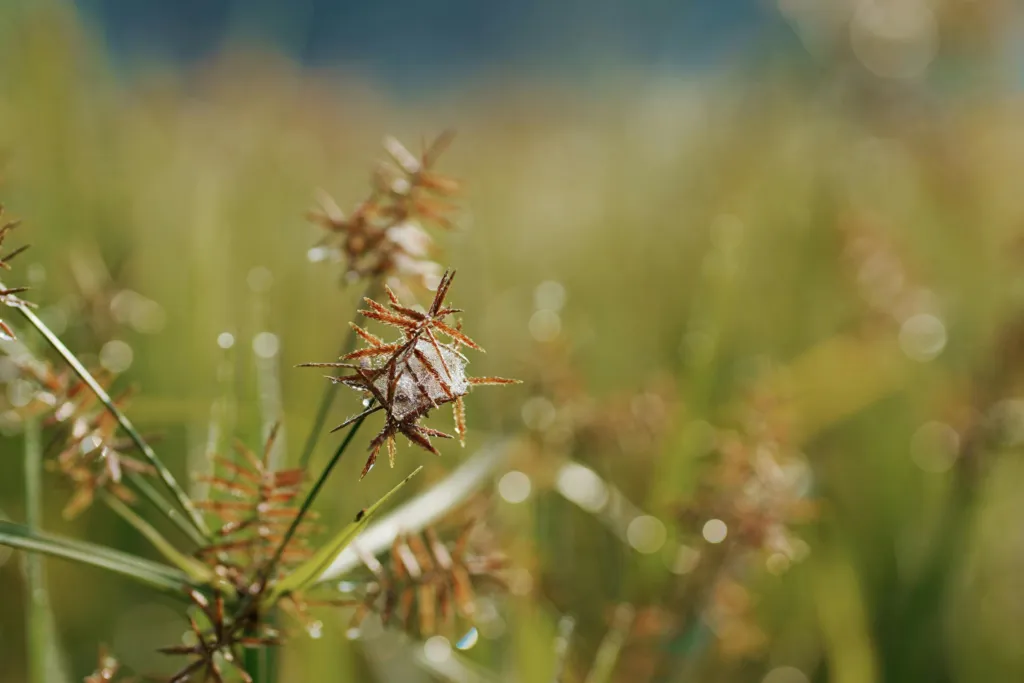
- Flower head: a spiky, umbrella-shaped cluster that appears at the top of mature plants
In a maintained lawn, the combination of faster growth, different color, and that triangular stem makes it obvious that something’s different about this plant.
Yellow Nutsedge vs Purple Nutsedge
Two species show up in residential lawns across Texas. Their behavior and the effort required to manage them is slightly different.
Yellow nutsedge is the more common of the two. It typically emerges in early to mid-summer and is somewhat more manageable with correctly timed herbicide applications.
It reproduces primarily through nutlets that form at the tips of rhizomes. Wet, poorly drained soil is its preferred environment, and lawns mowed too short give it an easy foothold.
Purple nutsedge is the more difficult variety. Its rhizomes produce nutlets along their entire length rather than only at the tips, which means disturbing the plant (even hand-pulling) can actually scatter nutlets and worsen the infestation.
It tends to appear later in summer, is more prevalent in the southeastern U.S., and generally requires professional-grade products to bring under control.
Kyllinga is a related, lookalike species that often gets mistaken for nutsedge, but its root system is weaker and it’s easier to kill. If you’re not certain which weed you’re dealing with, professional identification should be your first task. After all, using the wrong product wastes money and gives the actual problem more time to spread.
Where & When Does Nutsedge Show Up in Austin, TX?
The nutsedge weed has environmental preferences. The more you understand these, the easier it is to make conditions less favorable going forward.
It thrives in areas where soil stays consistently moist. That might mean low-lying areas, spots near downspouts, sections with compacted clay soil that drains slowly, and lawns where frequent shallow irrigation keeps the surface layer wet.
It also handles compacted soil better than most grass species. Why does that matter? Because it can take over the locations where your turf is struggling.
Seasonally, nutsedge emerges in late spring once soil temperatures have climbed past winter lows. Growth peaks during the hottest stretches of summer. In Central Texas, that means it’s at its most aggressive when temperatures are already stressful for cool-season turf.
It remains visible through early fall, then dies back. At least, the above-ground plant disappears, but the nutlets below are fully intact and ready to start the cycle again in spring.
What Makes Nutsedge So Difficult to Get Rid Of?
Mainly, the nutlet system. It gives nutsedge a level of redundancy that most weeds don’t have.
So a nutlet can sit in the soil through multiple treatment seasons, unaffected by herbicide, and germinate when conditions become favorable. This could be years after a treatment program was considered successful!
The root system runs 8 to 18 inches deep, but occasionally even deeper. That depth makes hand-pulling almost entirely ineffective. In most cases, you’ll break the stem long before the nutlets release from the rhizome. And the physical disturbance from pulling can actually stimulate dormant nutlets nearby, producing more growth rather than less.
Spread happens through the seeds, rhizomes, and nutlets. Foot traffic through an infested area, equipment moving between lawn sections, even water flow across the surface can carry nutlets to new locations. Basically, this is a weed that’s really good at moving around and staying alive.
One season of control, however successful, doesn’t resolve the problem. Dormant nutlets in the soil will generate new plants the following year. Managing nutsedge is a multi-season commitment, not a one-time fix.
So…How Do You Get Nutsedge Under Control?
There’s no product that eliminates nutsedge in a single application. That’s not how this weed works. The realistic goal is population reduction, season by season. The infestation will become smaller and more manageable over time. Here’s how that process works.
Confirm what you’re dealing with. Before selecting any herbicide, verify that you’re actually looking at nutsedge and which type. Triangular stems, sets of three leaves, and rapid regrowth are the markers. Misidentification leads to wasted applications and continued spread.
Stop hand-pulling. It’s instinctive to grab at a weed and yank. With nutsedge, that instinct works against you. Pulling removes the visible plant while leaving nutlets behind.
Select the right herbicide. Standard broadleaf weed killers don’t penetrate to the tuber depth required to affect nutsedge. Selective herbicides specifically formulated for sedge species are necessary.
For warm-season grasses common in Central Texas (Bermuda, St. Augustine, Zoysia), always verify label compatibility before applying.
Apply at the right time. Late spring to early summer is the primary treatment window. Young plants, under five or six leaves, absorb herbicide more effectively and haven’t yet had time to develop extensive nutlet networks. Treating actively growing plants is key. Herbicide applied to dormant or stressed plants doesn’t impact the root system effectively.
Protect the application. Avoid mowing for at least 48 hours before and after treatment. The leaf surface needs to be intact and undisturbed for adequate absorption. Most established infestations will need a follow-up application 7 to 10 days after the first.
How Does Nutsedge Hurt Your Lawn?
A few scattered patches might not seem urgent, but nutsedge creates problems that compound over time.
It grows faster than turf grass and competes aggressively for water, nutrients, and physical space in the soil. By the time an infestation is visible enough to be concerning, it’s already been drawing resources away from your lawn for some time.
The longer-term impact is thinning turf. As nutsedge outcompetes grass in affected areas, those zones weaken. This creates an opportunity for other weeds to move in.
Because the nutlet system keeps producing new growth regardless of what happens above ground, the recovery process often spans multiple treatment seasons. You’re not just managing what’s visible today. You’re working through what’s been accumulating underground.
Make Your Lawn Less Friendly to Nutsedge
Once an infestation is under active treatment, adjusting conditions in the lawn reduces future pressure. None of these steps alone eliminates the risk, but together they change the environment in ways that favor your grass over the weed.
Water deeply and less frequently. Shifting to one thorough watering session rather than multiple light ones encourages grass roots to grow deeper and makes the surface less favorable to nutsedge.
Address drainage issues directly. Low spots that collect standing water, areas near downspouts that stay consistently wet, and sections with clay soil that doesn’t drain well are nutsedge-friendly environments. Regrading, filling low spots, and improving soil structure in problem areas reduces the conditions that give nutsedge an advantage.
Aerate annually. Compacted soil limits grass root development while nutsedge handles it comparatively well. Annual aeration opens the soil profile and helps fertilizer, water, and air reach the root zone more effectively.
Keep turf dense. A thick, well-maintained lawn leaves fewer open spaces for nutsedge to exploit. Overseeding thin areas, maintaining appropriate fertilization, and mowing at the correct height for your grass type all contribute to the kind of turf density that competes with weeds.
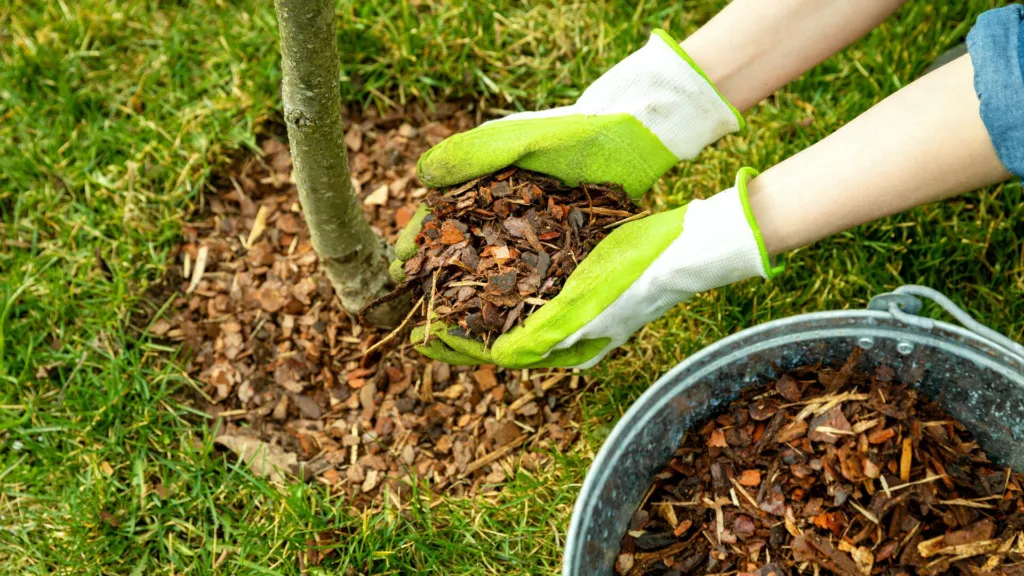
Mulch garden beds. In non-turf areas, a three-to-four-inch layer of mulch can suppress nutsedge emergence and reduce the population near lawn edges.
When to Reach Out to Real Green?
DIY treatments work for mild or early-stage infestations. But nutsedge that has spread, returned aggressively, or failed to respond to retail herbicides is a signal that the situation has outgrown what off-the-shelf products can accomplish.
Professional programs have access to commercial-grade selective herbicides, along with the experience to assess which species is present, select the correct product, and build an effective treatment schedule. Getting those details right is what separates a program that makes gradual progress from one that stalls out.
Real Green serves Austin and the surrounding communities throughout Central Texas. If nutsedge has become a recurring frustration in your yard, or if previous treatments haven’t made a visible dent, reach out. We can check out what you’re dealing with and put together an approach built for your specific lawn and conditions.
Nutsedge is one of the harder weeds to manage, but it isn’t unmanageable. With accurate identification, the right herbicide chemistry, proper timing, and patience across multiple seasons, the population comes down. Remember, the goal isn’t perfection in year one. It’s consistent progress that shifts the balance back in your lawn’s favor!
Blog Contributor: James Duhon
James Duhon serves as Branch and Area Manager for Real Green in Austin, with 20 years of experience. He is licensed by the Texas Department of Agriculture for both lawn care and structural pest control. His professional insight is shaped by service quality, customer satisfaction, team success, and two decades of leadership in lawn and pest operations.