
Discover Tips & Tricks That Keep Ants Away
Tiny ants can create massive problems. Simply spraying the ants you can see helps a little, but it doesn’t solve how to get rid of ants for the long term. True control requires targeting the colony itself.
At Real Green, our lawn care and pest professionals use a proven, step-by-step approach to reduce ant activity. Check out the six steps below! While complete elimination isn’t always realistic, you can dramatically minimize infestations by identifying the species, removing what they like, interrupting their trails, eliminating the nest, treating outdoor areas, and blocking entry points.
Why Do Ants Keep Coming Back?
If ants continue to reappear, it’s usually because something is still attracting them, or their colony hasn’t been fully addressed. The main nest is usually located outside. However, many ants come indoors for food or moisture.
Seasonal changes also play a role. Rain can drive ants inside seeking dry ground, while drought conditions push them indoors in search of water. At the end of the year, cooler temperatures often send them looking for warmth inside your home.
1. Identify the Type of Ant
Not all ants behave the same, which means treatment isn’t one-size-fits-all. Some prefer sugary foods. Others are drawn to proteins or grease. Certain species nest outdoors and only enter homes to forage, while others may build nests indoors.
Correct identification definitely matters. After all, using the wrong bait or treatment can make your efforts ineffective. Not sure if it’s an ant or a termite? You can tell them apart by their narrow waist and bent antennae, while termites have straight antennae and a thicker body.
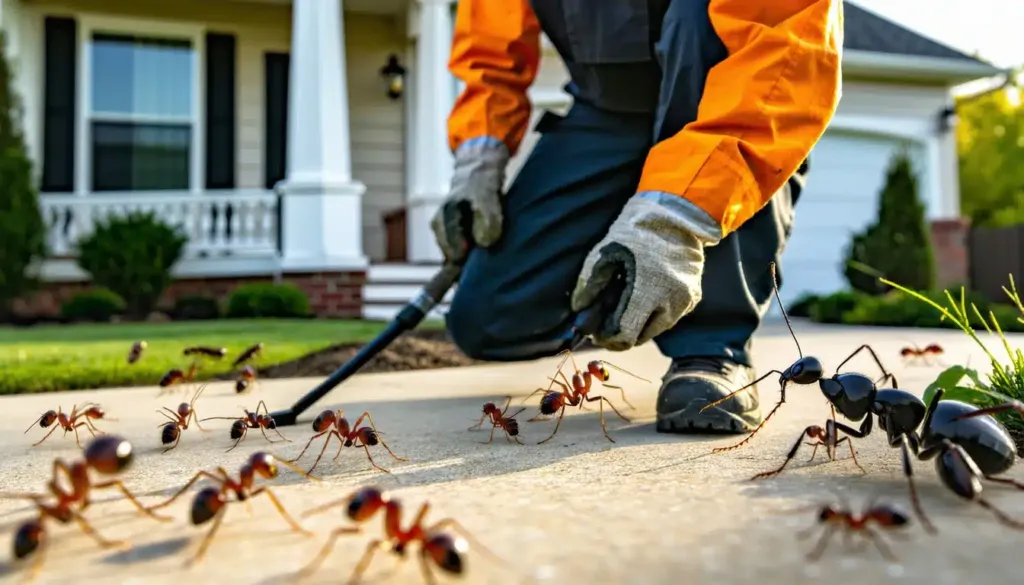
Other clues like size, color, location, and behavior can help narrow down if it’s one of the most common types of ants in the U.S. This lets you better decide what to do next.
Tracking down the nest
Colonies of ants vary wildly in size, from a few hundred individuals to several hundred thousand. And the nest could be virtually anywhere. Common hiding spots include underground burrows, mulch beds, the space behind your baseboards, beneath concrete slabs, or inside deteriorating wood like a tree stump or fence post.
Timing plays a role, too. Ant behavior shifts depending on the season, which changes where you’re likely to find them and how urgently they’re foraging. Spring wakes colonies out of dormancy and sends scouts flooding out in search of food. Summer is when colony populations hit their peak. Come fall, ants start pushing indoors looking for warmth.
Weather events accelerate all of this. For instance, heavy rain or a dry spell can send ants moving in unexpected ways.
Know what you’re looking at
A few clear indicators that a colony has moved in or established a foraging route through your home:
- Trails of ants moving in a consistent line
- Regular ant sightings in spaces near your food
- Mounds appearing in the yard or along the foundation perimeter
- Small accumulations of brownish gritty material called frass, which signals carpenter ant tunneling nearby
- A swarm of winged ants either indoors or just outside
Letting any of this go unaddressed tends to compound the problem. Carpenter ants silently hollow out structural wood over months or years. Fire ant colonies expand aggressively and their stings can cause serious reactions in sensitive individuals.
Most species will simply keep growing until you’re able to stop and eliminate them.
2. Remove What They Like
Ants don’t show up randomly near your Austin home. They’re searching (or finding) something. Eliminating access to food and moisture is one of the most important steps in control.
Start by sticking to these simple habits:
- Wash dishes regularly
- Keep trash bins tightly closed
- Store food in sealed containers
- Clean up crumbs and spills quickly
Moisture is just as important. Even a small leak can support an entire colony. Check under sinks, around appliances, and near plumbing fixtures, and repair any issues you find.
What Does It Take to Get Rid of Ants Forever?
We have some tough news. Complete, permanent removal is unlikely. Ants are everywhere, and new colonies can always form nearby, like your neighbor’s yards.
Instead, the goal is consistent, long-term control. This includes:
- Regular exterior maintenance
- Ongoing sanitation
- Preventive treatments in early spring
- Quick action when activity appears
With the right approach, infestations can be minimized and managed effectively season after season.
3. Break Their Scent Trails
Ants rely on invisible chemical trails (pheromones) to guide others to food sources. Once a trail is established, more ants will follow it.
You can disrupt this by cleaning surfaces with:
- A vinegar and water solution
- Soapy water
- Standard household cleaners
You’ll remove the scent markers and confuse the ants. However, just this step isn’t how you get rid of ants. It simply slows activity. More ant control is still a must.
Weather & Location Shape Ant Behavior
Where you live and what the weather is doing has a bigger influence on ant activity than most homeowners realize. Wet weather saturates soil and pushes colonies toward drier ground (usually indoors), making exterior entry points the first thing to address.
Drought has the opposite effect, driving ants inside to find moisture, with kitchens and bathrooms as the main targets.
Sudden drops in temperature cause ants to push into the structure seeking warmth, so sealing and interior baiting become the priority response at that point.
In Texas and along the Gulf Coast, fire ants don’t follow seasonal patterns the way cooler-climate species do. They’re active year-round, and consistent yard and mound treatments are a genuine safety necessity for homes with children or pets.
4. Kill the Colony
The root problem of ants isn’t easy to solve. Crushing or spraying ants feels productive, but it can sometimes make things worse by scattering the colony.
The most effective method is baiting. This works by allowing workers to carry a slow-acting substance back to the nest, where it spreads to other ants, including the queen. Over time, it’s one of the most reliable ways to destroy an entire colony.
Key tips for using bait:
- Avoid spraying near bait stations
- Place it directly along active trails
- Keep bait available for several weeks
The right bait depends on the kinds of ants you’re dealing with. For example, sweet baits work for sugar-feeding ants, while protein-based options are better for others.
Natural Options for Getting Rid of Ants
Diatomaceous earth. This natural ant killer works as a barrier by dehydrating ants, but loses effectiveness when wet.
Vinegar, peppermint oil, and soap. This is useful for killing ants on contact or disrupting trails, but they won’t eliminate a colony.
Boric acid or borax. It’s effective when used in bait form, as ants carry it back to the nest.
These DIY methods are easy to do and can really help. If you really want to know how to get rid of ants though, you’ll need a full treatment strategy.
5. How to Get Rid of Ants Outside Your Home
As we mentioned before, most indoor infestations start outdoors. That means exterior treatment is extremely important.
Check common nesting areas:
- Under rocks or landscaping materials
- Tree stumps or wood piles
- Soil near your foundation
- Mulch beds
- Cracks in pavement
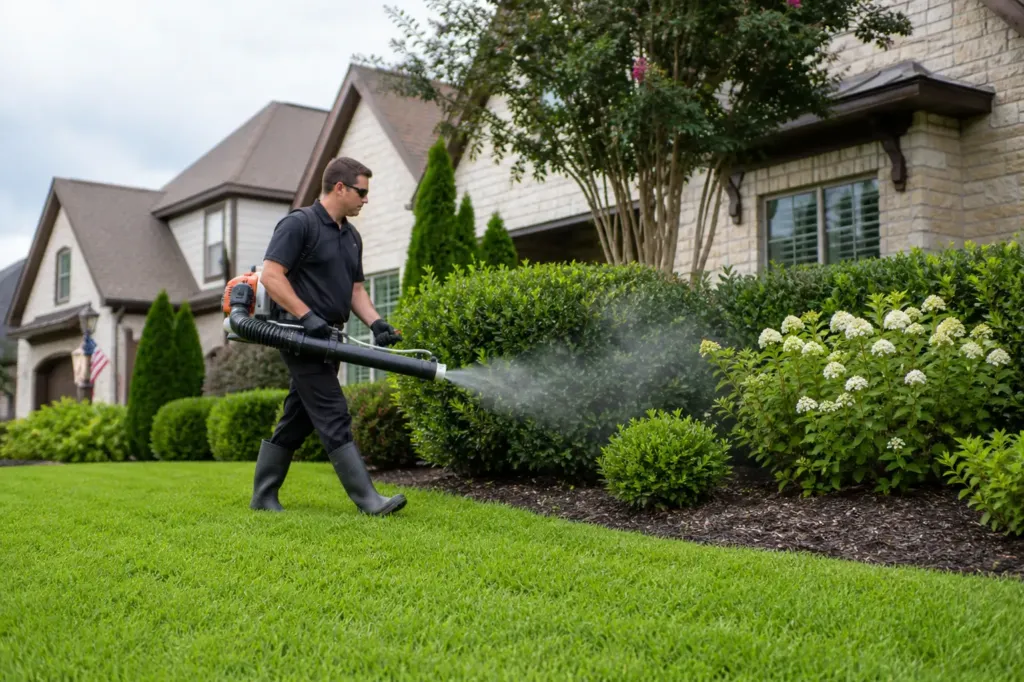
Following trails outside can often lead you to the nest. Using granular bait or non-repellent treatments around the perimeter helps eliminate colonies at the source rather than just pushing them away.
Be sure to keep a clear space around your home’s foundation to reduce ideal nesting conditions and be able to spot them more easily.
6. Keep Them From Coming In
Preventing future ant infestations is a real priority. Of course, that’s easier said than done since ants can enter through extremely small gaps. Some of their favorite places to sneak in?
- Foundation cracks
- Vents and siding gaps
- Window and door frames
- Gaps along baseboards
- Utility line openings
Seal these areas with caulk, repair damaged weatherstripping, and fix screens. Also, trim back vegetation touching your home and keep mulch or soil from piling against the structure.
Ant Treatment Not Working?
If you sprayed and now ants are everywhere, this probably signals scattering or budding. Stop all sprays near trails, wipe surfaces clean, and reset with bait plus outdoor treatment.
Ants appearing in multiple rooms? Multiple entry points, wall void nesting, a moisture problem, or outdoor vegetation creating a direct bridge to the structure. Investigate all four before assuming the treatment itself is the issue.
If bait is disappearing but ants are still returning, you may have multiple colonies, mismatched bait type, or an untreated outdoor source. Extend the treatment window and inspect outside.
Bait sitting untouched? Competing food sources are winning. Remove accessible food, reposition stations directly on the active trail, and reconsider whether the bait formulation matches the species.
Common Questions About Ant Control
-
What’s the quickest way of how to get rid of ants?
Sprays provide fast relief, but baiting combined with outdoor treatment delivers longer-lasting results.
-
Why do ants keep coming back?
Usually due to untreated colonies, accessible food sources, or unsealed entry points.
-
Do baits attract more ants?
Yes. That’s the intention. More ants means more bait carried back to the colony.
-
How long does it take for bait to work?
Typically one to three weeks for noticeable results.
-
Are ants worse during certain seasons in Austin, TX?
Yes, especially in spring when activity increases after winter dormancy.
Take Control of Your Ant Issues
Ant infestations are manageable with the right strategy. The key is to follow a complete process: identify the species, remove attractants, disrupt trails, eliminate the colony, treat the exterior, and seal entry points.
Remember, if you’re dealing with carpenter ants, professionals can help. Both to treat the infestation and to assess any underlying moisture or wood damage driving it. Fire ant infestations near areas where children or pets spend time also carry enough health risk to justify giving us a call.
Still not sure how to get rid of ants? Reach out to the team at Real Green! We proudly serve Austin and the surrounding communities of Central Texas, ensuring high-quality lawn care and pest control services across the area.
Blog Contributor: James Duhon
James Duhon serves as Branch and Area Manager for Real Green in Austin, with 20 years of experience. He is licensed by the Texas Department of Agriculture for both lawn care and structural pest control. His professional insight is shaped by service quality, customer satisfaction, team success, and two decades of leadership in lawn and pest operations.