
Learn About the Dangerous Kinds That Bite & Spread Disease
Mosquitos buzzing around outside can drive you crazy. Of course, they can also cause itchy welts on your skin that seem to appear overnight. But did you know that some types of mosquitoes are more annoying (and dangerous) than others?
While several mosquito varieties want your blood and carry diseases with them, others are actually harmless. Keep reading to find out how the mosquito control experts at Real Green tell one mosquito species from another, as well as which ones are the most dangerous.
How Many Mosquitoes Are Buzzing Around? 
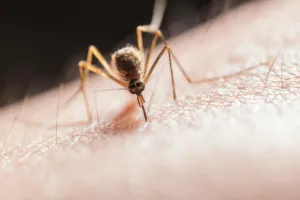
Only a fraction of the world’s 3,000+ mosquito species live in the United States, roughly 200 kinds, and even fewer in the Austin area. However, the risk to human health comes from a surprisingly small number of them.
Mosquitoes can be grouped into four primary genera: Culex, Aedes, Anopheles, and Culiseta. Their behaviors vary widely in their active feeding hours, the hosts they target, the habitats where they lay eggs, and the regions where they thrive. In fact, many species don’t seek out people at all, preferring birds or other animals, and some don’t bite any creatures.
-
Culex Mosquitoes
This group of mosquitoes is most active during the evening and nighttime hours. We most often find them indoors as persistent pests, and they typically breed in still or contaminated water sources like sewers, clogged gutters, or abandoned swimming pools. In the U.S., Culex mosquitoes are notably the principal pests responsible for transmitting West Nile virus to humans.
Northern House Mosquito (Culex pipiens)
- Hibernates during winter inside (basements, crawl spaces, and attics) and outside (animal burrows, tunnels, and logs)
- Thrives in urban and suburban environments, particularly in warm and tropical climates
- Uses man-made structures, laying large numbers of eggs in sewers, retention ponds, storm-water catch basins, ground pools, and wastewater containers
Southern House Mosquito (Culex quinquefasciatus)
- Known for transmitting West Nile virus, St. Louis encephalitis, and canine heartworm.
- They like breeding in nutrient-rich standing water
- Found throughout the Southern U.S.
Western Encephalitis Mosquito (Culex tarsalis)
- Can breed at elevations up to 10,000 feet, making it a concern even in mountainous regions
- Found in the Midwest and Western states
- Delivers a more painful bite than its relatives
-
Anopheles Mosquitoes
There are nearly 450 species of these mosquitoes around the world, which is bad news since these nighttime biters are the sole mosquito variety able to transmit malaria.
Common Malaria Mosquito (Anopheles quadrimaculatus)
- Historically, this species was responsible for malaria transmission in the U.S.
- Breeds in freshwater bodies with vegetation (ponds, swamps, marshes, and slow-moving streams)
- Found mainly in the Eastern U.S., Midwestern, and Southeastern states
-
Aedes Mosquitoes
These mosquitoes are uniquely suited to life among people. They break from typical mosquito behavior by being aggressive daytime biters. So when your outdoor afternoon activities are interrupted (gardening, backyard barbecue, etc.)? It’s probably Aedes. Making matters more troubling is that they have a strong preference for feeding on humans rather than animals.
Asian Tiger Mosquito (Aedes albopictus)
- Persistent, aggressive biting behavior during the daytime
- Not native to the United States and can survive in cooler climates, which has allowed it to spread across the Southeast, Midwest, Northeast, and Pacific regions
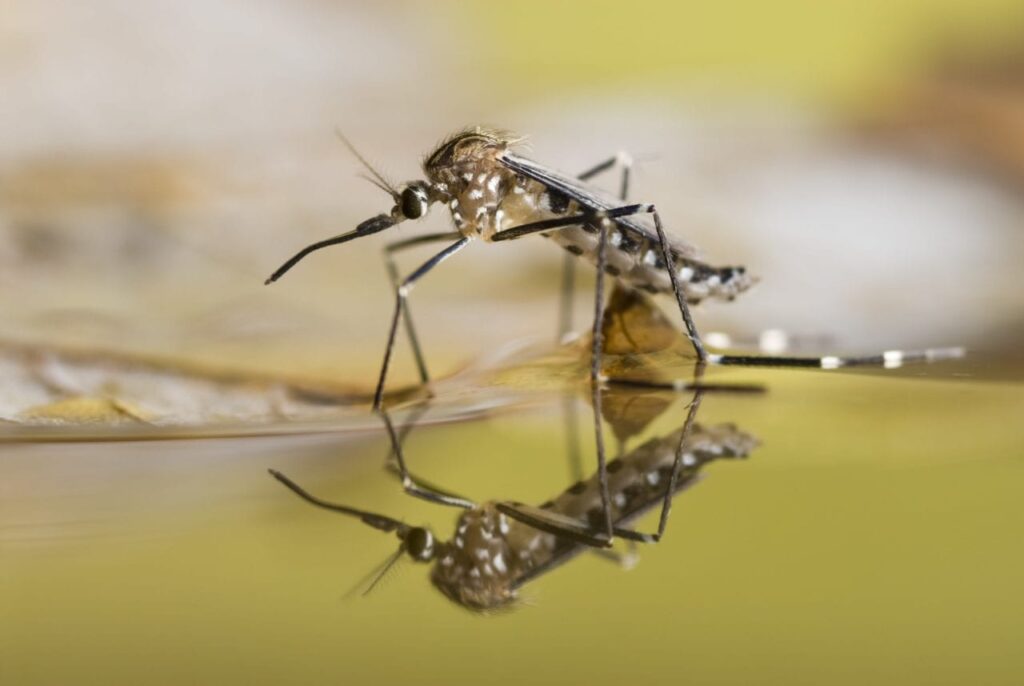
- Recognized by its striking black-and-white markings
- Breeds in tires, containers, and shaded areas
Yellow Fever Mosquito (Aedes aegypti)
- Found mostly in the Southeast and Southwest U.S., along the Mid-Atlantic, and in parts of California
- Known for transmitting Zika, Dengue, Chikungunya, and Yellow Fever
- Breeds in artificial containers and urban environments (tires, flower pots, buckets, birdbaths, etc.)
- Thrives during warm, humid months
Eastern Saltmarsh Mosquito (Aedes sollicitans)
- Extremely aggressive biter during the day and at night
- Not typically a major disease spreader
- Breeds in salt marshes and coastal wetlands along the Atlantic Coast and Gulf Coast
- Can travel up to 40 miles from its breeding site
-
Culiseta Mosquitoes
This is a less important type of mosquito in Texas since it’s found primarily in cooler regions. Plus, these mosquitoes are a lower risk to human health.
Common Characteristics of Culiseta Mosquitoes
- Found mostly in the Northern U.S., higher elevations, and parts of Canada
- Prefer cooler temperatures and are often active in early spring or fall when other species are less prevalent
- Breed in snowmelt pools, woodland ponds, and cold, stagnant water
What Diseases Can Mosquitoes Transmit?
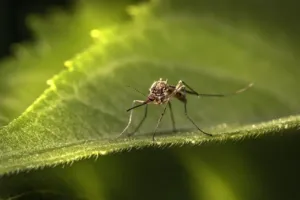
- Dengue: Another Aedes-transmitted disease, with occasional outbreaks in southern states
- Chikungunya: Less common but still a concern, also spread by Aedes mosquitoes
- Malaria: Rare in the U.S. but still possible through local transmission by Anopheles mosquitoes
- Yellow Fever: Mainly a travel-related risk, though Aedes aegypti populations exist in the U.S.
- West Nile Virus: The most widespread mosquito-borne disease in the U.S., primarily transmitted by Culex mosquitoes
- Zika: Regional outbreaks, mainly transmitted by Aedes aegypti and Aedes albopictus
Why Do Some Like Humans & Others Don’t?
Contrary to popular belief, it is exclusively the female mosquito that bites. Male mosquitoes are practically harmless, feeding only on floral nectars and plant juices. However, the female requires a blood meal to obtain the proteins necessary for producing eggs.
These female hunters are drawn to warm-blooded creatures, primarily targeting birds and mammals, though some specialized species will feed on reptiles or amphibians. Their search begins by sensing the carbon dioxide exhaled by potential hosts from impressive distances. Guided upwind by this signal, they then use visual clues, subtle shifts in humidity, and specific body odors to pinpoint their target.
Most species have preferred feeding windows, often at dawn or dusk, though they may also bite during warm, overcast daytime hours.
How to Tell One Mosquito Species From Another
It’s easy to mistake other insects, like harmless crane flies, for mosquitoes. Experts use a precise method called the “Three P’s” for accurate identification.
The “Three Ps” of Mosquito Identification
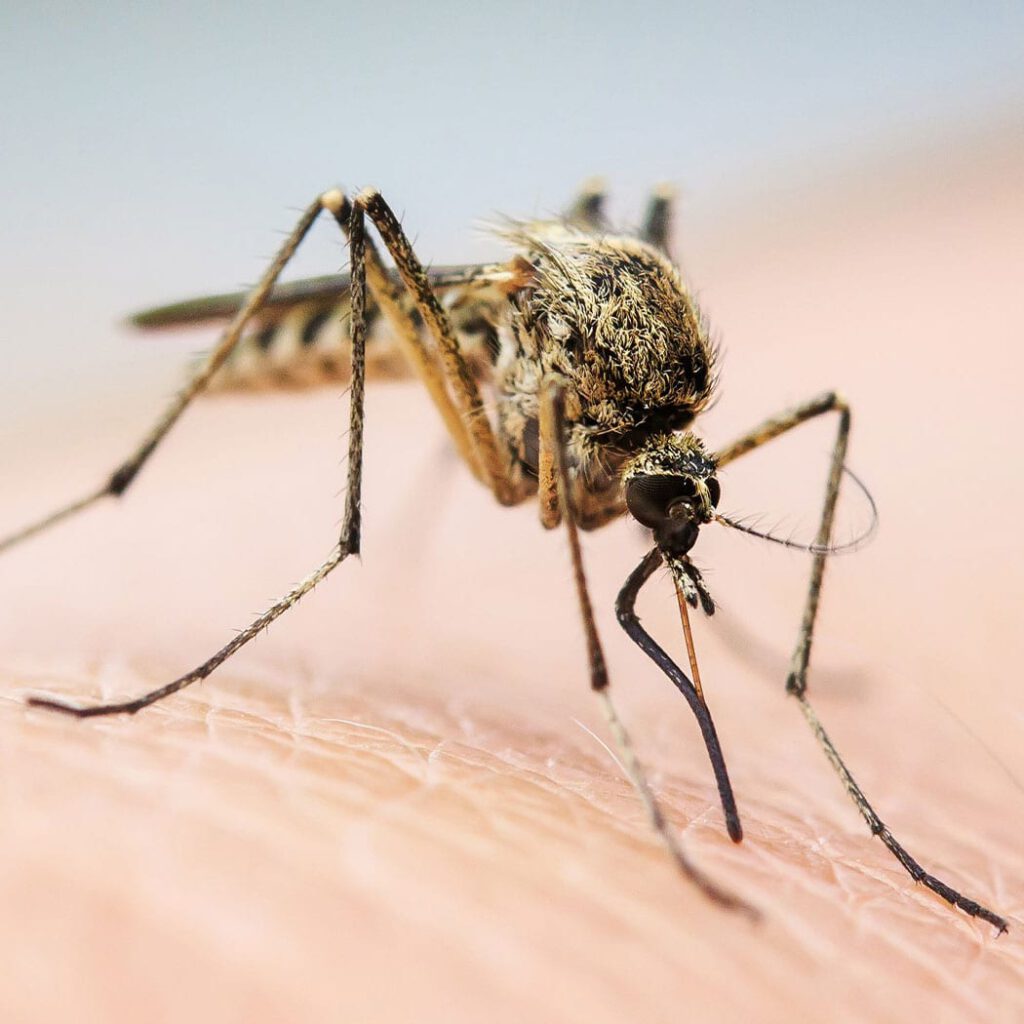
Posture. This is actually one of the easiest ways to ID a mosquito. When an Anopheles mosquito lands and rests, it holds its body in a straight-line posture (abdomen angled upward). Aedes and Culex mosquitoes, on the other hand, form a hunched “V” shape when they rest.
Pattern. Look at the mosquito’s coloring. Black-and-white striping, especially on the legs, is typically Aedes. More uniform coloring, like brown or gray, is probably a Culex or Anopheles mosquito.
Palps. These are the sensory organs near the mosquito’s mouth. In Anopheles mosquitoes, the palps are long and prominent, roughly as long as the proboscis. In Aedes and Culex mosquitoes, the palps are much shorter.
When Are Mosquitoes An Issue?
Frequent sightings or bites are clear signs it’s time to call a professional pest control service. A persistent swarm can quickly spoil any outdoor gathering. However, several risk factors can elevate a nuisance into a serious concern that warrants proactive management:
- Recent Travel: Increased vigilance is needed if anyone in your household has visited regions with active mosquito-borne disease transmission.
- Community Health Alerts: Stay informed about local public health notices regarding West Nile virus or similar outbreaks.
- Water Accumulation: Any source of stagnant water on your property directly contributes to rising mosquito populations.
- Climatic Conditions: Warm, humid weather lengthens the breeding season and accelerates mosquito reproduction.
5 Mosquito Management Strategies
Successful mosquito control requires several complementary techniques.
Eliminate Breeding Grounds
Your most powerful tactic is to remove the places where mosquitoes lay eggs. Diligently tip out any collected water at least once a week. Pay close attention to clogged gutters, plant saucers, children’s toys, and even small containers like bottle caps, which can hold enough water for larvae to develop.
Know Your Enemy
Target your efforts by understanding local species. Culex mosquitoes often breed in organically rich water found in storm drains or neglected pools. Aedes species typically use man-made containers holding clean water, while Anopheles prefer vegetated freshwater edges.
Understand Seasonal Patterns
Activity peaks during the warm summer months across most of the country but can persist year-round in southern climates. Align your prevention strategies with these active periods.
Use Personal Safeguards
Reduce your exposure by wearing long, loose-fitting clothing and applying EPA-approved insect repellent. Planning outdoor activities to avoid dawn and dusk can also significantly reduce bites.
Apply Targeted Treatments
When habitat management is insufficient, the precise application of larvicides or adulticides may be necessary. For safety and maximum effectiveness, the application of these products is best handled by licensed professionals who can ensure correct usage and coverage.
So Long, Mosquitoes!
The most successful mosquito management plans use strategies tailored to specific species. They integrate three critical approaches: applying larvicides to water sources, actively reducing the adult population, and modifying the environment to eliminate breeding habitats. Modern, advanced control systems are designed to disrupt the reproductive cycle itself, preventing the emergence of new generations and creating a lasting reduction in local mosquito numbers.
Ready to protect your home, lawn, or business? Real Green provides identification and elimination of mosquito breeding sites as well as ongoing monitoring. We proudly serve Austin and the surrounding communities of Central Texas, ensuring high-quality lawn care and pest control services across the area.
Blog Contributor: James Duhon
James Duhon serves as Branch and Area Manager for Real Green in Austin, with 20 years of experience. He is licensed by the Texas Department of Agriculture for both lawn care and structural pest control. His professional insight is shaped by service quality, customer satisfaction, team success, and two decades of leadership in lawn and pest operations.